
The Ultimate Formula Sheet for ACT Math
©2026 World Class Tutoring LLC · worldclasstutoring.com
Contents
1.Number Definitions
2.Fractions, Decimals & Percentages
3.Rates, Ratios & Proportions
4.Exponents, Roots & Polynomials
5.Parabolas
6.Graphing Lines
7.Parent Graphs & Transformations
8.Data, Probability & Combinatorics
9.Angles
10.Triangles
11.Circles
12.Polygons
13.Solids
14.Trigonometry
15.Sequences & Series
16.Logarithms
17.Vectors
18.Matrices
19.Conic Sections
Number Definitions
Natural numbers1, 2, 3, 4, … (positive integers; also called counting numbers)
Whole numbers0, 1, 2, 3, … (natural numbers plus zero)
IntegersAll whole numbers and their negatives; no fractions or decimals
Rational numbersAny number that can be expressed as a ratio of two integers; includes all integers, fractions, and terminating or repeating decimals
Irrational numbersCannot be expressed as a ratio of two integers; non-terminating, non-repeating decimals (ex: π, √2)
Real numbersAll rational and irrational numbers
Complex numbersAll real numbers plus imaginary numbers; form: a + bi
Prime numbers to memorize2, 3, 5, 7, 11, 13, 17, 19, 23 — 2 is the only even prime
Fractions, Decimals & Percentages (r = percent in decimal form)
Fractionpartwhole
Percentpart100
Percent increase or decrease|old − new|old × 100%
Increase by a percentmultiply by (1 + r)
Decrease by a percentmultiply by (1 − r)
Simple InterestA = P(1 + rt)
Compounded annuallyA = P(1 + r)ᵗ
Compounded n times/yearA = P(1 + rn)ⁿᵗ
Rates, Ratios & Proportions
Distance, Rate, TimeDistance = Rate × Time
Conversion factor (general form)ending unitsstarting units
Conversion factor (example)10 feet × 12 inches1 foot = 120 inches
Mixture formula(Concentration of A × Volume of A) + (Concentration of B × Volume of B) = Final concentration × (Volume of A + Volume of B)
Direct variationy = kx (y varies directly as x)
Inverse variationy = kx (y varies inversely as x)
Exponents, Roots & Polynomials
Multiplication ruleab · ac = ab+c
Division ruleabac = ab−c
Power rule(ab)c = abc
Negative exponentsa−b = 1ab
Fractional exponentsab/c = c√ab = (c√a)b
Zero exponenta0 = 1
Imaginary uniti = √−1; i2 = −1; i3 = −i; i4 = 1
Imaginary cycle patterni4n = 1; i4n+1 = i; i4n+2 = −1; i4n+3 = −i
To find iⁿ: divide n by 4 and use the remainder (0→1, 1→i, 2→−1, 3→−i)
To find iⁿ: divide n by 4 and use the remainder (0→1, 1→i, 2→−1, 3→−i)
Complex conjugates(a + bi)(a − bi) = a2 + b2
Difference of squaresa2 − b2 = (a + b)(a − b)
Perfect square trinomiala2 ± 2ab + b2 = (a ± b)2
Sum of cubesa3 + b3 = (a + b)(a2 − ab + b2)
Difference of cubesa3 − b3 = (a − b)(a2 + ab + b2)
Completing the squarex2 + bx + b24 = (x + b2)2
Parabolas
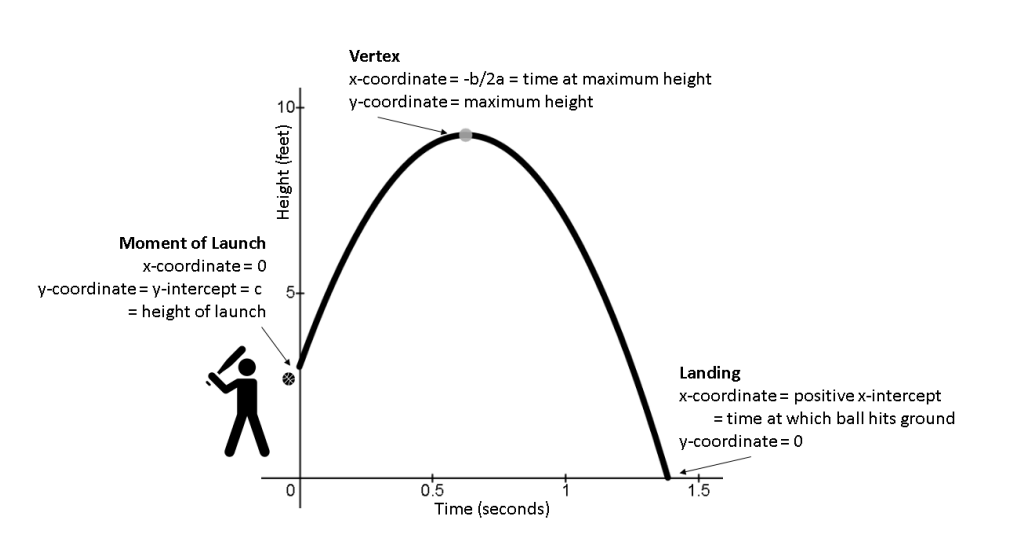
Standard Form: f(x) = ax² + bx + c
Vertex(−b2a, f(−b2a))
y-interceptc
x-intercepts (quadratic formula)x = −b ± √b² − 4ac2a
Discriminant b² − 4acPositive → 2 real roots
Zero → 1 real root
Negative → 2 imaginary roots
Zero → 1 real root
Negative → 2 imaginary roots
Sum of solutions−ba
Product of solutionsca
Factored Form: f(x) = a(x − m)(x − n)
x-interceptsm and n
x-coordinate of vertexm + n2
Vertex Form: f(x) = a(x − h)² + k
Vertex(h, k)
Directiona > 0 opens up; a < 0 opens down
Graphing Lines
Slope formulam = y₂ − y₁x₂ − x₁
Slope-intercept formy = mx + b
Standard formAx + By = C
Point-slope formy − y₁ = m(x − x₁)
Horizontal line slopem = 0
Vertical line slopeundefined
Parallel linesEqual slopes
Perpendicular linesSlopes are opposite reciprocals
Distance formulad = √(x₂ − x₁)² + (y₂ − y₁)²
Midpoint formulaM = (x₁ + x₂2, y₁ + y₂2)
Quadrants
Parent Graphs & Transformations

| Transformation | Visual effect |
|---|---|
| f(x) + k | Shift up by k units |
| f(x) − k | Shift down by k units |
| f(x + h) | Shift left by h units |
| f(x − h) | Shift right by h units |
| −f(x) | Reflect over the x-axis (flip upside down) |
| f(−x) | Reflect over the y-axis (flip left-right) |
| c · f(x) | Stretch vertically by factor of c (becomes skinnier) |
| 1c · f(x) | Shrink vertically by factor of c (becomes fatter) |
Data, Probability & Combinatorics
Averagesum of itemsnumber of items
Probabilitydesired outcomespossible outcomes
MedianCenter data point (when ordered)
ModeMost frequent data point
RangeMaximum − minimum
P(A and B) — independent eventsP(A) × P(B)
P(A or B)P(A) + P(B) − P(A and B)
Expected ValueE(x) = Σ xᵢ · P(xᵢ)
Factorialn! = n(n−1)(n−2)…1 0! = 1
Fundamental Counting PrincipleIf one event can occur in m ways and a second independent event can occur in n ways, then the two events can occur in m×n total ways (ex: 3 shirts × 2 pants = 6 outfits)
Combinations — order doesn't matter nCrn!r!(n−r)!
Permutations — order matters nPrn!(n−r)!
Angles
Vertical anglesVertical angles are congruent
Complementary anglesAdd up to 90°
Linear pairAngles that form a linear pair are supplementary (add up to 180°)
Angles around a pointAdd up to 360°
Parallel lines cut by a transversalAll acute angles are congruent; all obtuse angles are congruent
Triangles
AreaA = ½bh
Area (non-right triangle)A = ½ab sin C
AnglesThree angles of a △ add up to 180°
Exterior angle= sum of two remote interior angles
Pythagorean Theorema² + b² = c²
Pythagorean Triples3-4-5, 5-12-13, 7-24-25
Law of Sinesasin A = bsin B = csin C
Law of Cosinesa² = b² + c² − 2bc·cos(A)
Special Right Triangles
Law of Sines / Cosines
Triangle Inequality TheoremThe third side x must satisfy:
|a − b| < x < a + b
|a − b| < x < a + b
Circles
AreaA = πr²
CircumferenceC = 2πr
Arc lengthx360 = arccircumference (x = central angle)
Sector areax360 = sectorarea of circle (x = central angle)
Radius and tangentA radius and tangent line meet at a right angle
Central vs. inscribed angleA central angle is double the inscribed angle that subtends the same arc
Radius ⊥ tangent
Central angle = 2 × inscribed angle
Polygons (n = number of sides)
Area of a rectangleA = lw
Area of a trapezoidA = 12(b₁ + b₂)h
Sum of exterior angles360°
Sum of interior angles180(n − 2)
One interior angle (regular polygon)180(n − 2)n
Number of diagonals (convex only)n(n − 3)2
Regular hexagonCan be divided into 6 equilateral triangles; all sides and all interior angles are equal (each interior angle = 120°)
Properties of Parallelograms
SidesOpposite sides are parallel and congruent
AnglesOpposite angles are congruent; consecutive angles are supplementary
DiagonalsBisect each other and each forms a pair of congruent triangles; if congruent → rectangle; if perpendicular → rhombus
AreaA = base × height
Solids
Volume
Rectangular prism (box)V = lwh
CylinderV = πr²h
SphereV = 43πr³
ConeV = 13πr²h
PyramidV = 13lwh
Triangular prismV = 12bh × length
Surface Area
Rectangular prism (box)SA = 2(lw + lh + wh)
CylinderSA = 2πr² + 2πrh
CubeSA = 6s²
SphereSA = 4πr²
Trigonometry
SOHCAHTOA
Sinesin = opphyp
Cosinecos = adjhyp
Tangenttan = oppadj
Cosecantcsc(x) = 1sin(x)
Secantsec(x) = 1cos(x)
Cotangentcot(x) = 1tan(x)
Tangent identitytan(x) = sin(x)cos(x)
Pythagorean identitysin²(x) + cos²(x) = 1
Cofunction identitysin(x) = cos(90° − x)
Radians360° = 2π radians
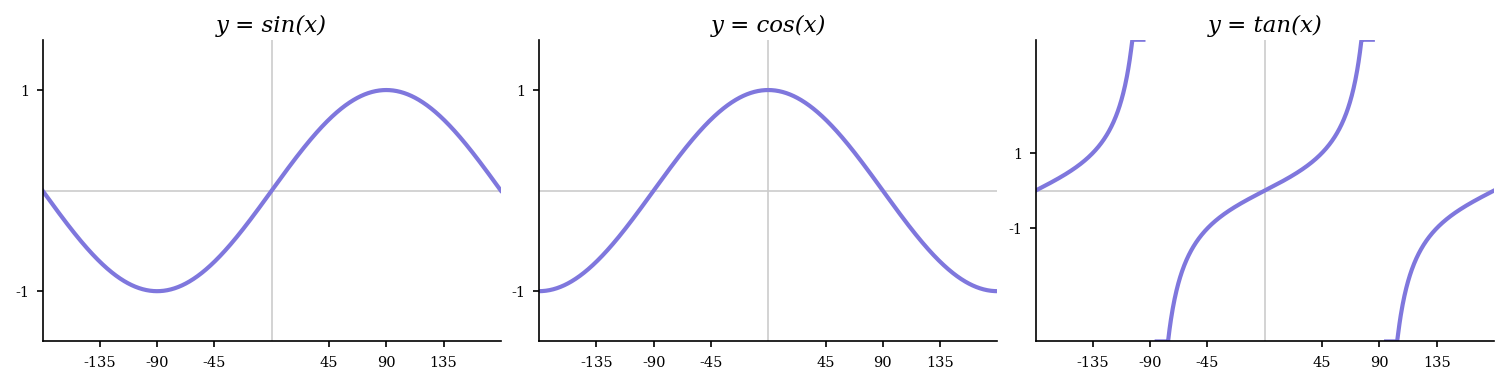
Sinusoidal Functions: y = A sin(Bx − C) + D (also for cos, csc, sec)
Amplitude|A|
Period2πB
Phase shiftCB
Vertical shiftD
Tangent Functions: y = A tan(Bx − C) + D (also for cot)
AmplitudeNone
PeriodπB
Phase shiftCB
Vertical shiftD
Sequences & Series (a₁ = first term, n = number of terms, d = common difference, r = common ratio)
Arithmetic — add a constant each time (ex: 5, 8, 11, 14, 17…)
nth term (closed form)an = a1 + (n − 1)d
nth term (recursive)an = an-1 + d
Sum of n termsSn = n2(a1 + an)
Geometric — multiply by a constant each time (ex: 3, 6, 12, 24, 48…)
nth term (closed form)an = a1 · rn−1
nth term (recursive)an = an-1 · r
Sum of n termsSn = a1(rn − 1)r − 1
Logarithms
DefinitionIf logb(a) = x, then bx = a
Change of Baselogb(a) = log alog b
Product Propertylogb(x) + logb(y) = logb(xy)
Quotient Propertylogb(x) − logb(y) = logb(xy)
Power Propertylog(xa) = a · log(x)
Natural Logln x = loge(x), e ≈ 2.718
Vectors
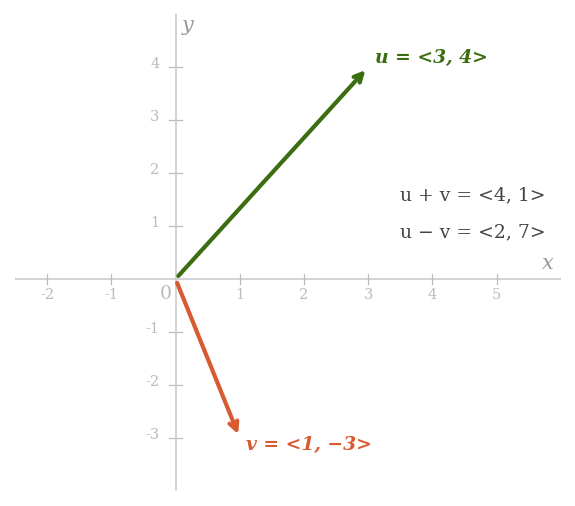
Component formv = <x, y>
Magnitude|v| = √x² + y²
Addition<x₁, y₁> + <x₂, y₂> = <x₁+x₂, y₁+y₂>
Subtraction<x₁, y₁> − <x₂, y₂> = <x₁−x₂, y₁−y₂>
Scalar multiplicationa<x, y> = <ax, ay>
Unit vector (i + j form)<x, y> = xi + yj
Matrices
Addition — only possible when rows of first = rows of second AND columns of first = columns of second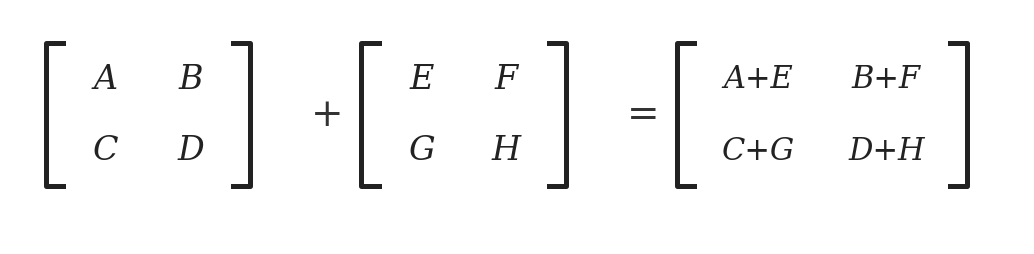
Scalar multiplication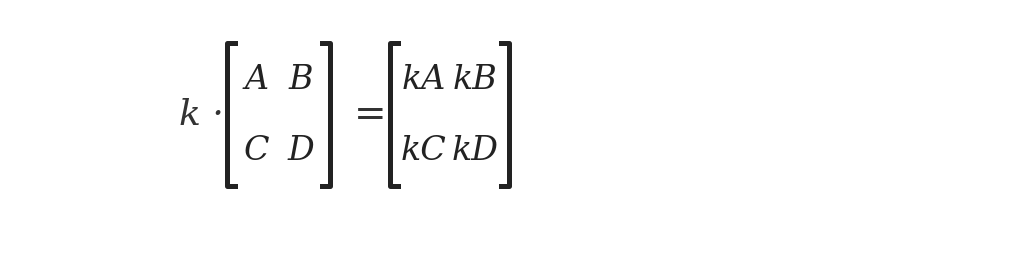
Multiplication — only possible when columns of first = rows of second
Conic Sections
Circle — center (h, k), radius r(x − h)² + (y − k)² = r²
Ellipse — center (h, k); 2a = horizontal axis, 2b = vertical axis; c = distance from center to focus(x − h)²a² + (y − k)²b² = 1
Horizontal ellipsea² = b² + c²
Vertical ellipseb² = a² + c²
Horizontal hyperbola(x − h)²a² − (y − k)²b² = 1
Vertical hyperbola(y − k)²a² − (x − h)²b² = 1
Circle
Ellipse
Hyperbola
©2026 World Class Tutoring LLC · worldclasstutoring.com